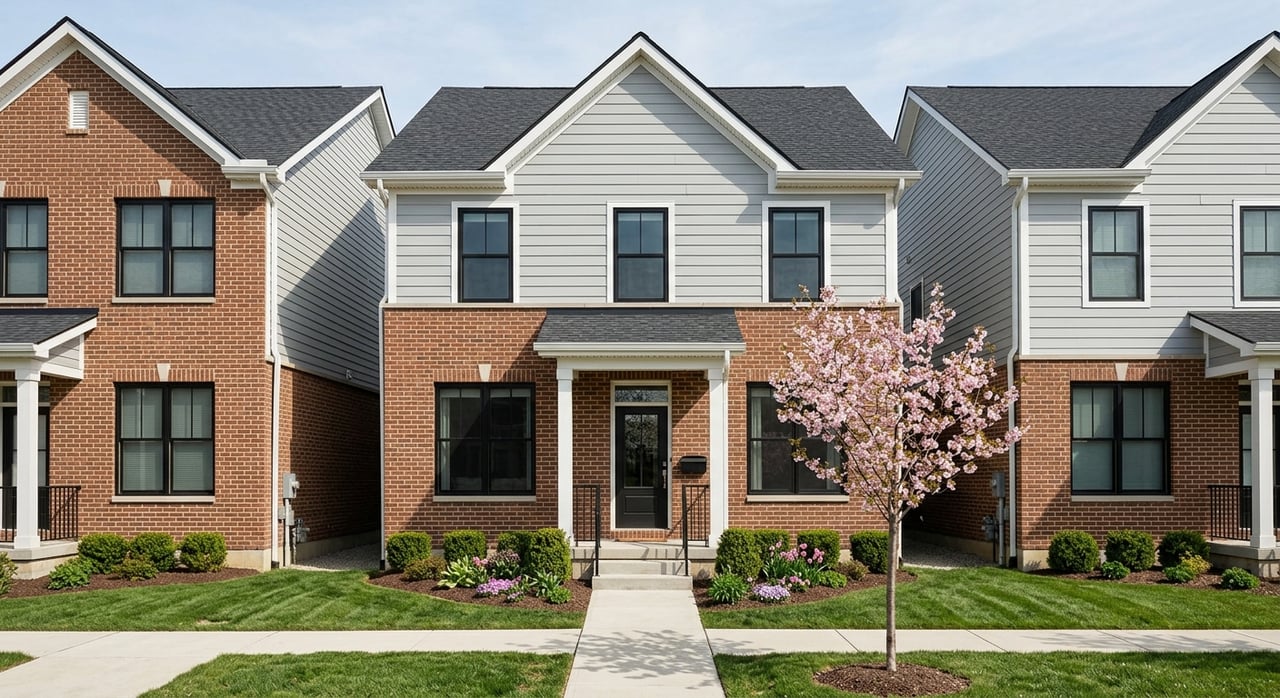
Reston Single Family vs Townhome Living for Busy Families
April 16, 2026
April 16, 2026
If your family is busy, your home needs to make daily life easier, not add more to your plate. In Reston, choosing between a single-family home and a townhome is not just about square footage or price. It is also about maintenance, dues, walkability, access to Metro, and how you want your week to feel. If you are weighing both options, this guide will help you compare the tradeoffs and focus on what matters most for your lifestyle. Let’s dive in.
Reston is not laid out like a typical suburb made up of isolated neighborhoods. According to the Reston Association, the community serves more than 60,000 residents, maintains more than 1,300 acres of open space, and includes 55 miles of pathways.
That larger community structure changes the way many families think about housing. Fairfax County’s Reston planning framework describes Reston Town Center as the community’s highest-density urban center and a regional shopping and cultural destination, while village centers like Lake Anne, Hunters Woods, South Lakes, and North Point are intended to serve neighborhood-scale retail and services.
For you, that means the home itself is only part of the decision. Where the home sits within Reston can matter just as much as whether it is detached or attached.
For busy families, the better option often comes down to time, routines, and convenience. A larger home with a yard may sound ideal, but it can also come with more upkeep and more driving. A townhome may offer less private outdoor space, but it can simplify your schedule and place you closer to daily needs.
In Reston, that choice is shaped by planned village centers, transit station areas, trails, and shared amenities. Fairfax County notes that the highest densities are concentrated within one-quarter mile of rail stations and taper down within one-half mile, which helps explain why some attached homes are closer to walkable, transit-oriented areas while more spacious detached homes may be farther out in residential sections of the community.
If your family wants more separation from neighbors, more interior space, and a larger yard, a single-family home may feel like the better long-term fit. Detached homes often offer more flexibility for storage, parking, outdoor play, and everyday household overflow.
That extra space can be especially helpful if you work from home, host guests often, or simply need room for a growing family. Many buyers also like having more direct control over their property, even within Reston’s covenant structure.
The tradeoff is usually maintenance. With a single-family home, you are more likely to handle your own yard work, exterior upkeep, and day-to-day property tasks.
In Reston, that can still come with community oversight. The Reston Association Design Review Board reviews exterior alterations and improvements within Reston Association, so updates to the outside of the home may require review.
A single-family home may be the right choice if you are prioritizing:
For many move-up buyers, those features can outweigh the extra work that comes with a larger home.
Townhomes are often appealing to families who want to simplify. You may have less private yard space, but you also may have fewer outdoor chores and less exterior upkeep to manage yourself.
That can be a major plus if your calendar is already packed with commuting, school drop-offs, activities, or travel. In many cases, attached-home living lets you spend less time maintaining the property and more time enjoying what is around you.
This is where buyers need to look closely. Reston Association says its 2026 annual assessment is $890 per property, and that assessment helps fund shared services and amenities such as pools, pathways, and open space.
On top of that, Reston has more than 160 sub-associations. If you buy a townhome, you may be budgeting for both Reston Association dues and cluster or condo association dues. Those cluster associations can also levy annual and special assessments and are responsible for keeping cluster common areas in good order and repair.
A townhome may be the better fit if you are prioritizing:
For many relocating buyers or families with demanding schedules, that convenience can be worth the tradeoff in yard size.
In many markets, comparing a single-family home to a townhome is fairly straightforward. In Reston, the fee structure and maintenance setup can be more layered.
Reston Association’s governing structure matters because some responsibilities depend on the type of home and the association attached to it. For example, Reston Association notes in its quick reference guide that for private roads, which include most cluster and condo associations, the cluster or condo association is responsible.
That can affect more than just monthly budgeting. It can also shape how things like road care, repairs, and snow response are handled. The same guide explains that VDOT handles state-maintained roads, plows single-family subdivisions only after 2 or more inches of snowfall, and directs residents on private cluster or condo streets back to their association or management company.
For a busy family, that is a practical issue, not just a paperwork detail. Before you choose a home type, it is worth understanding exactly what is covered, what is shared, and what will still fall on you.
One of the biggest reasons families lean toward single-family homes is yard space. That makes sense, especially if you want more room to play, garden, entertain, or simply spread out.
But Reston offers a different kind of tradeoff. Because the community includes extensive open space and pathways, some families find they can live comfortably with less private yard space while still keeping easy access to outdoor recreation through the broader community network described by the Reston Association.
That does not mean a townhome replaces a yard. It does mean your lifestyle may depend less on your lot size than it would in another suburb.
If your household has complicated schedules, commute patterns, or one-car days, location can outweigh home type. Reston’s transit setup gives some buyers a real reason to choose convenience over square footage.
WMATA says Reston Town Center Station is a short walk to dining, shopping, and entertainment, but it does not have commuter parking. WMATA also says Wiehle-Reston East offers daily parking, bike facilities, and connections through Fairfax Connector.
That difference can shape your day-to-day routine. If you want easier access to Metro, errands, and mixed-use areas, a townhome in a more connected location may fit better. If you prefer more private outdoor space, storage, and a quieter residential setting, a single-family home may still be worth the extra driving.
No one can guarantee resale outcomes, but buyer appeal in Reston often ties back to convenience. Fairfax County describes Reston Town Center as a regional destination and the village centers as neighborhood gathering places with retail and services, which helps explain why homes near those nodes may appeal to buyers who value accessibility and walkability.
There is also a practical side to resale in Reston. According to Reston Association resale disclosure requirements, Virginia law requires sellers to obtain the Reston Association resale disclosure certificate. If the home is also part of a cluster or condominium association, the buyer will need those additional disclosure documents as well.
That does not make one property type better than the other. It simply means Reston transactions can involve more documentation, and that is something to plan for whether you are buying now or thinking ahead to a future sale.
If you are deciding between a single-family home and a townhome in Reston, start with your routine instead of your wish list. The best choice is often the one that supports your real week, not just your ideal Saturday.
Ask yourself:
In Reston, the exact street, association setup, and distance to Metro often matter more than the home label itself. That is why two homes with similar square footage can feel very different in everyday life.
For many families, a single-family home in Reston offers privacy, room to grow, and more control over the property. A townhome often offers easier upkeep, better access to walkable areas, and a simpler day-to-day lifestyle.
Neither option is automatically better. The right choice depends on how you want to balance space, maintenance, dues, and convenience within Reston’s unique community structure.
If you want help narrowing down which Reston home style fits your routine, budget, and long-term goals, Dimple Laudner can help you compare options with a local, practical lens and a concierge-style approach.
Stay up to date on the latest real estate trends.
A Loudoun County Listing Agent’s Strategic Approach
Whether you're buying or selling, Dimple Laudner is dedicated to making your real estate journey seamless and stress-free. With personalized service, unwavering integrity, and a passion for excellence, she will help you achieve your goals and find your perfect home. Get started with Dimple Laudner today!